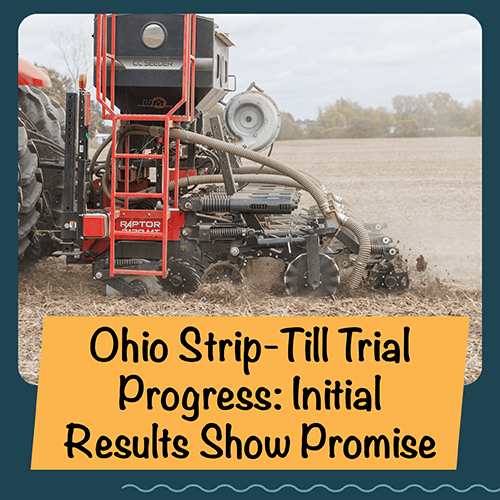


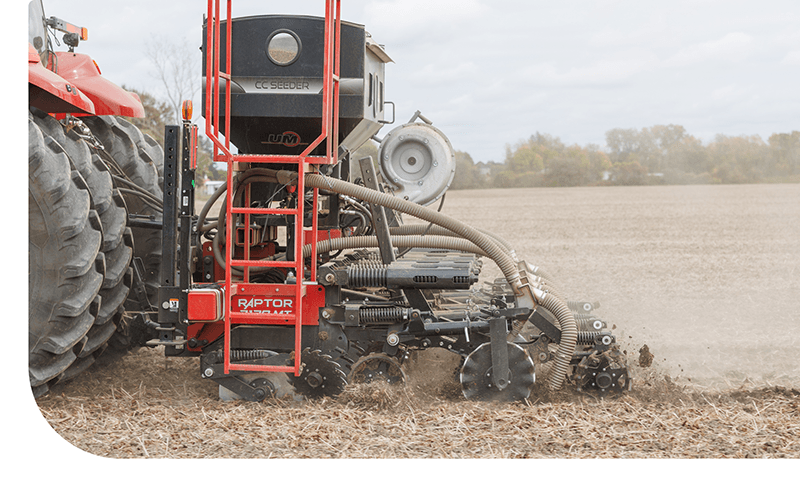
A few months ago we explored the question, Does Strip-Till Pay? and discussed what strip-tillage is, why we’re evaluating it, and how it may benefit growers across Ohio. Now it’s time to time to highlight the progress of our research by sharing early-season observations and data collected from the PCT | Sunrise® strip-till plots – corn and soybean trials.
Across multiple locations throughout Ohio, the PCT | Sunrise team has been evaluating strip-till systems alongside products such as Humic DG® and StandUp® Fertizol® EZ. While harvest is still ahead and final yield results are not yet available, the data collected so far is providing valuable insight into how strip-till practices are influencing root development, crop growth, and plant vigor.
Why We Are Tracking Ohio Strip-Till Trial Results
 Our goal is simple: help growers make informed management decisions based on local data. Every farm operation is unique, but field testing allows us to compare practices under real-world Ohio growing conditions. Throughout the season, we’ve monitored root development, emergence, growth stages, ear development, and overall crop health to better understand how strip-till systems perform compared to traditional no-till management.
What we’ve consistently observed is that strip-till is creating an environment that supports earlier crop development and stronger plant growth.
Soybean Trial Highlights: Clinton County
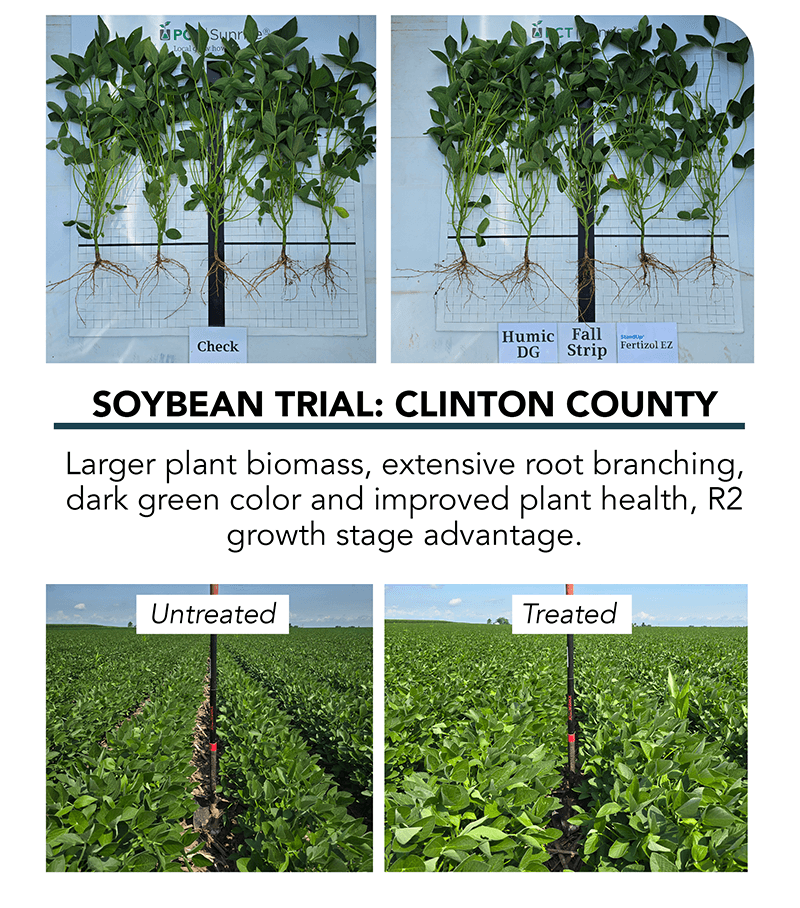
One of our soybean trials in Clinton County has shown several encouraging visual differences between treated and untreated areas.
Early observations revealed:
- Larger overall plant biomass
- More extensive root branching
- Darker green plant color
- Improved plant health
- An R2 growth stage advantage
The enhanced root development is especially noteworthy. Strong root systems are critical for nutrient uptake, water utilization, and overall crop resilience throughout the growing season.
In side-by-side comparisons, treated soybean plants demonstrated more vigorous growth and greater root mass, providing visible differences that continued throughout the season.
Corn Trial Highlights: Clark County
Our corn trials in Clark County have also shown consistent advantages in strip-till treatments.
Throughout the growing season, we observed:
- Faster crop advancement in strip-till plots
- Earlier tassel emergence
- Consistent growth stage leads over no-till areas
- Enhanced plant vigor
Field observations from early July highlighted clear differences in plant maturity. In several comparisons, strip-tilled areas had already tasseled while nearby no-till plots remained behind in development. These observations matched what we had seen earlier in the vegetative stages of growth and continued through reproductive development.
Ear Development Update
As we move closer to harvest, ear development continues to provide another important indicator of crop performance.
Current observations show:
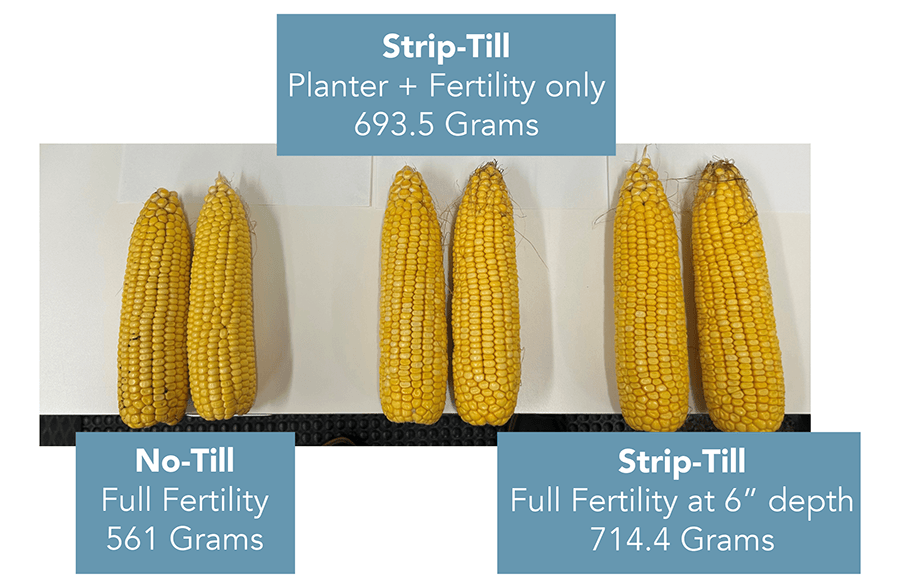
- Noticeable differences in ear maturity
- No-till plots remaining approximately one to two growth stages behind
- Ear development trends matching earlier vegetative and tassel observations
In one comparison, ears from the no-till full fertility treatment averaged 561 grams, while strip-till treatments measured 693.5 grams when fertility was applied at planting and 714.4 grams when fertility was placed at a 6-inch depth. These observations provide another indication that strip-till management may be supporting more advanced crop development.
It’s important to remember that these measurements represent in-season observations. Final harvest data will ultimately determine how these differences translate into yield and return on investment.
A Consistent Season-Long Advantage
One theme has been consistent throughout our Ohio strip-till trial results: visual advantages have remained evident from early growth through reproductive stages. When strip-till practices were paired with Humic DG® and Fertizol® EZ, we frequently observed:
- Stronger root systems
- Earlier crop development
- Improved crop vigor
- Enhanced plant health
- Greater consistency throughout the season
While every growing season presents different challenges, the data collected so far suggests strip-till may offer growers opportunities to improve crop development and establish stronger plants earlier in the season.
Follow Along Through Harvest
The story isn’t finished yet. These observations represent our trial progress, and we will continue monitoring plots through harvest to evaluate final yield performance and economic outcomes. We look forward to sharing complete results once all data has been collected and analyzed.
For now, the trends we’re seeing across Ohio are encouraging, and we’re excited to continue learning alongside our customer-owners. If you’re new to strip-tillage or would like a refresher on why Sunrise Cooperative & PCT | Sunrise is evaluating this practice, be sure to read our previous blog. Where we discussed what strip-till is, why we’re researching it, and its potential value for Ohio growers. Stay tuned as we continue following our PCT | Sunrise strip-till research story all the way through harvest and share the final results.